Sheep/goats are being fed in the ruins of Al-Diriyah
Slide 1982
======================= Al-Diriyah (Arabic: الدرعية; also spelled Ad-Dir'iyah, Ad-Dar'iyah or Dir'aiyah) is a town in Saudi Arabia located on the northwestern outskirts of the Saudi capital, Riyadh. Diriyah was the original home of the Saudi royal family, and served as the capital of the first Saudi dynasty from 1744 to 1818. Today, the town is the seat of the Diriyah Governorate, which also includes the villages of Uyayna, Jubayla, and Al-Ammariyyah, among others, and is part of Ar Riyad Province.
Location
The ruins of the old city of Diriyah lay on either side of the narrow valley known as Wadi Hanifa, which continues southwards through Riyadh and beyond. Consisting almost entirely of mud-brick structures, the ruins are divided into three districts, Ghussaibah, Al-Mulaybeed, and Turaif, set on top of hills overlooking the valley. Of the three, Turaif is the highest, and it's bottom is easily accessible to tourists by foot. Part of the city wall, running along the edges of the wadi and also made of mud-bricks, are still extant along with some short observation towers.
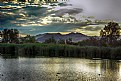
The modern city is built at a lower altitude at the foot of the hill upon which Turaif is located. To the north of the town, inside the valley, are a number of gardens, palm groves, and small farms and estates. A dam known as Al-Ilb lies further north.
[edit] History
Although the location is sometimes identified with an ancient settlement mentioned by Yaqut and Al-Hamadani known as "Ghabra",[1] the history of Diriyah proper dates back to the 15th century. According to the chroniclers of Nejd, the city was founded in 1446-7 by Mani Al-Mraydi, an ancestor of the Saudi royal family. Mani and his clan had come from the area of Al-Qatif in eastern Arabia, upon the invitation of Ibn Dir', who was then the ruler of a group of settlements that now make up Riyadh. Ibn Dir' is said to have been a relative of Mani' Al-Mraydi, and Mani's clan is believed to have left the area of Wadi Hanifa at some uknown date and were merely returning to their country of origin.[2][3]
Initially, Mani' and his clan, known as the Mrudah, settled in Ghusaybah and Al-Mulaybeed. The entire settlement was named Al-Dir'iyah, after Mani's benefactor Ibn Dir'. Later on, the district of Turaif was settled.[3] Many families from other towns or from the bedouin tribes of the nearby desert eventually settled in the area and by the 18th century Diriyah had become a well-known town in Nejd. The renovated mosque of Muhammad bin Abdul Wahab at Old Diriyyah. Photo by Mohammad Nowfal Areekode The renovated mosque of Muhammad bin Abdul Wahab at Old Diriyyah. Photo by Mohammad Nowfal Areekode
At that time, Muhammad ibn Saud emerged from a struggle within the ruling family of Al-Diriyah, the Al Migrin (sons of Migrin, a descendant of Mani'), and became the emir, or ruler, of Al-Diriyah. In 1744, Ibn Saud took in a fugitive religious scholar named Muhammad ibn Abdul Wahhab, who hailed from the town of Al-Uyaynah, lying on the same wadi some 30 miles upstream. Ibn Saud agreed to implement Ibn Abdul Wahhab's religious views, and what later became known as the First Saudi State, with its capital at Diriyah, was born. Within the next several decades, Ibn Saud and his immediate descendants managed to subjugate all of Nejd, as well as the eastern and western regions of Arabia, and sent raids into Iraq. Diriyah quickly swelled in size and increased in wealth, becoming the largest town in Nejd and a major city in Arabia by the standards of the time. However, the Saudis' conquest of the holy cities of Mecca and Medina drew the ire of the Ottoman Empire, the major Islamic power at the time, led to the Ottoman-Saudi War of 1811-1818 and an invasion of Arabia by Ottoman and Egyptian forces brought the Saudi state to an end in 1818, with Diriyah capitulating after a nearly-year-long siege. The leader of the invading force, Ibrahim Pasha, ordered the destruction of Diriyah. However, when a member of the local nobility tried to revive the Wahhabi state in Diriyah, Ibrahim ordered his troops to destroy the town even further and set whatever was left of it on fire. When the Saudis revived their fortunes in 1824 and again in 1902, they made their capital further south in Riyadh, which remained their capital ever since.
The town's original inhabitants left Diriyah after 1818, with the bulk of them moving to Riyadh. The area was resettled in the 20th century, mostly by former nomads (bedouins), and the new city was founded by the Saudi government in the 1970s.[4] This new city of Diriyah grew in size and is now a small but modern town and the seat of its own governorate. The ruins remain a tourist attraction, and are subject to a slow restoration project on the part of the Saudi government.
ahhh.. I am also struggling with the 'category' selection in most of my pictures.. but for example, in this one, I would probably have selected 'travel' .. :) kidding.. peace, Avi












 0
0 


